
Solarpunk cured her doom
How a painter from Santa Cruz went from climate paralysis to protopian possibility

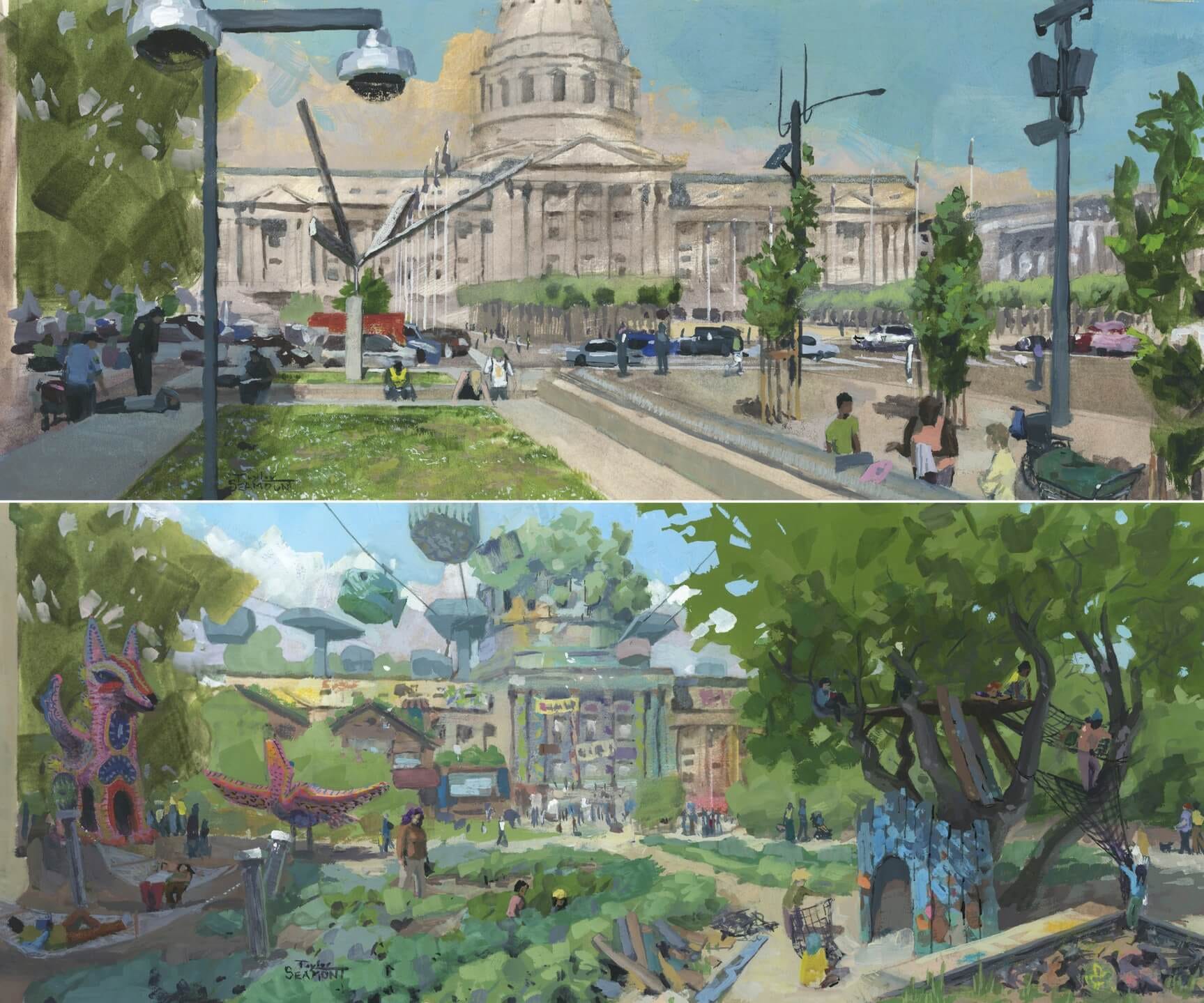
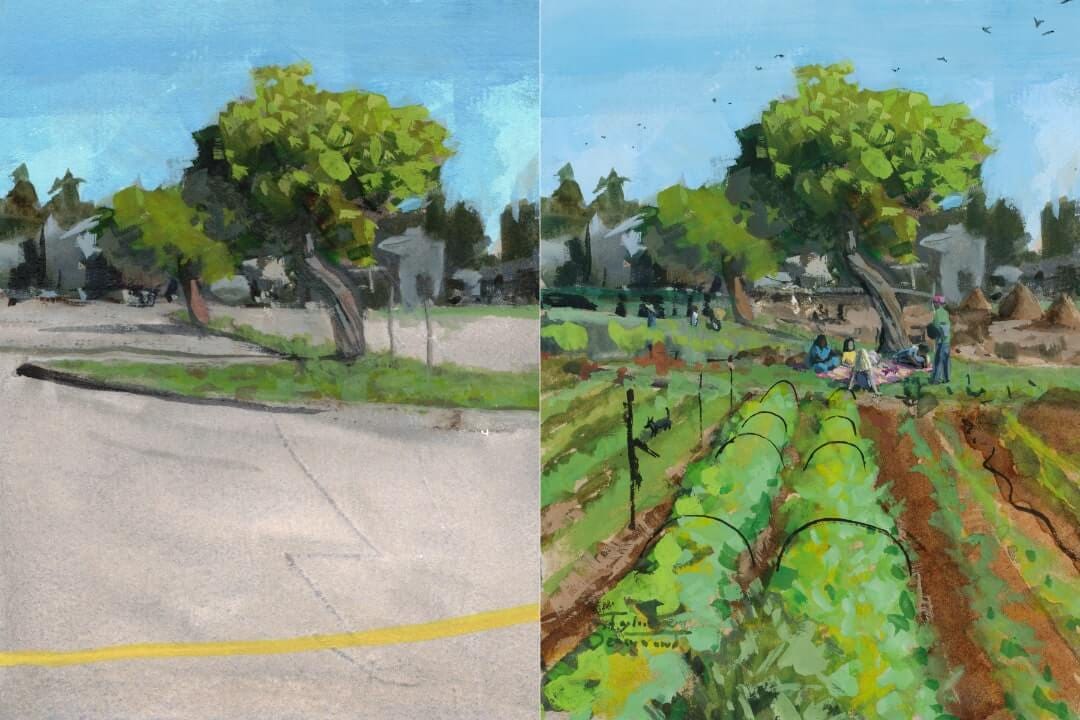
Taylor Seamount does these really awesome oil paintings that envision how real places might look if they were solarpunked. We had a chat with Taylor about her work below.
What’s your background?
I grew up in Santa Cruz, CA, where I live now and which is the setting of most of my speculative art. My dad, an industrial physicist in Silicon Valley, was always introducing us to cutting-edge technology. My family encouraged my fascination with science, although I primarily saw myself as an artist. I studied physics and biochemistry at UC Davis, earning a BS in Biochemistry and Molecular Biology.
After college, I spent five years in Seattle making surrealist paintings while working as a math and science tutor. Eventually, I returned to school to study painting at the Mark Kang-O’Higgins Modern Painting Atelier. During that time I developed a disabling chronic illness and later moved back home to Santa Cruz.
With my world largely confined to my parents’ neighborhood at the wild-urban interface, I became fascinated by the local ecology. That curiosity led me to earn my UC California Naturalists Certification.
How did you get into Plein Air painting?
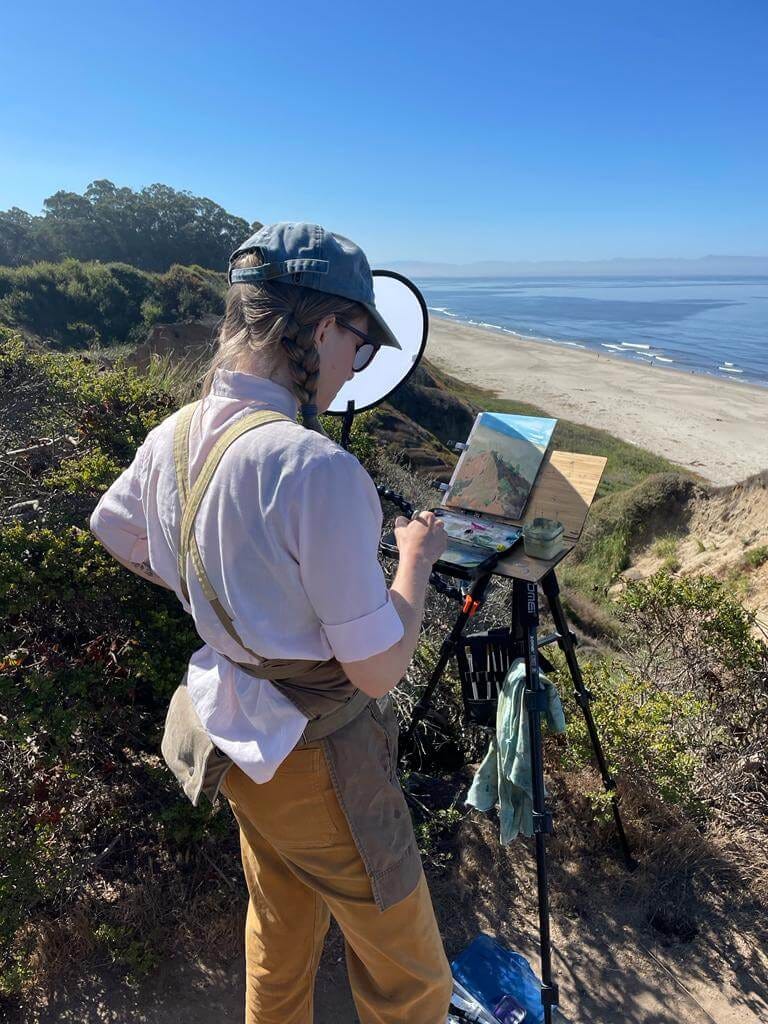
I became interested in plein air – painting landscapes outdoors from life – when I read Color and Light, by James Gurney, best known for Dinotopia. At the time, I had a strong desire to make my surrealist scenes feel real, like the fantasy scenes of James Gurney’s work. In the book, Gurney insists that studying light outdoors is essential to mastering light in imaginative landscapes.
Why are you solarpunk?
Growing up, I was impacted by both Silicon Valley tech culture and Santa Cruz’s 1990s hippy culture. The hippies warned of the environmental destruction by “the system,” but didn’t give a clear picture of an alternative. The techies enthusiastically promised environmental fixes but didn’t acknowledge the misguided incentives of capitalism. Despite my intense attachment to environmental issues, I ended up paralyzed by a sense that the world’s demise was inevitable.
That was until I started learning from anthropology, people’s histories, and Indigenous perspectives. I learned that, when it comes to human society, the organisational possibilities are far more vast than I had been taught. I began following local Indigenous leaders and became engrossed by visionary fiction. My understanding of the present became clearer, and my vision for the future began to open up.
When I discovered solarpunk, it felt like I had found a thematic home for the art I wanted to create. Portraying technology, both ancient and modern, in service of a just and ecologically sustainable society. Practicing solarpunk has transformed the doomer in me. By sharing this work, I hope to help transform that feeling in others.
Help us champion solarpunk by taking out a paid subscription to this newsletter. It costs less than the price of a coffee a month and means a huge amount to us.
As a paid subscriber you will get a free copy of SolarPunk Detective #1 and other bonuses as well as a warm, fuzzy feeling inside knowing you are helping bring a deliciously sustainable world closer to reality.
Which solarpunk artwork are you most proud of and why?
I’m most proud of my piece Phoenix Village. My shade of solarpunk is definitely Rooted and this is a piece deeply rooted in my local community. Not only was it one of my first collaborations with a local activist, but it also spoke directly to local public policy and history. Each of my projects is a balance between the playful joy of worldbuilding and useful commentary on current issues. I think this piece did that well.
Tell us more about your other solarpunk projects please
Solarpunk Pen Pals is a writing game that I developed with solarpunk author Todd Medema. The game has you imagine your community 20 years in the future during a solarpunk transition. You draw cards with worldbuilding and character elements that help you brainstorm details about the world and create a character in it. You and a partner then write each other letters as your characters. The game borrows the playing cards from the Solarpunk RPG.
It’s been inspiring seeing how uplifted people are by the activity. Participants often come up with imaginative solutions to local issues in the process.
Why does green technology tend to be the backdrop rather than the focus of your solarpunk work?
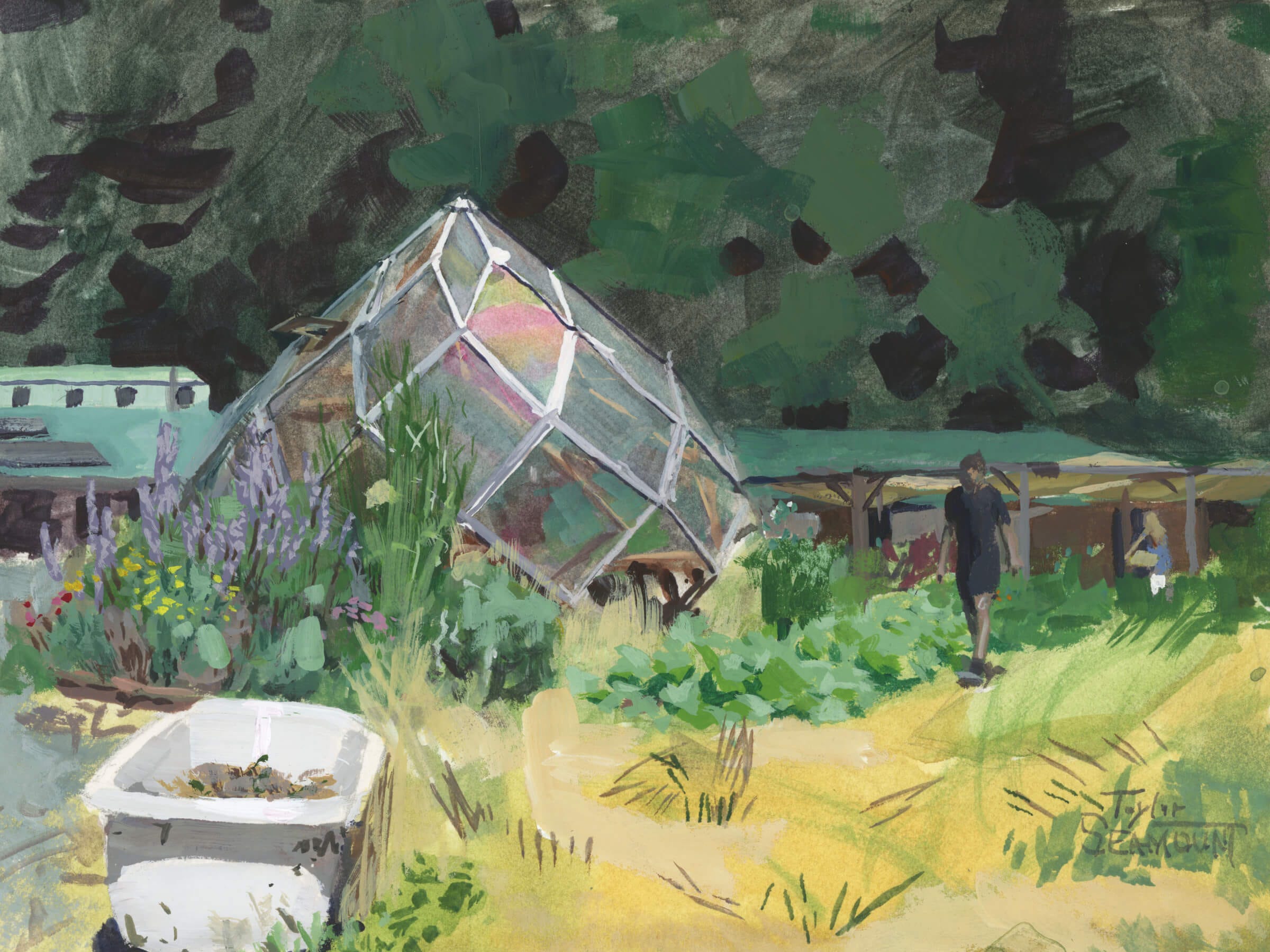
My proximity to Silicon Valley makes me want to respond to the “technology will save us” mindset. I see the climate crisis as a systems failure rather than a technological one. I want to communicate my perspective that green technology will only be reliably implemented in beneficial ways in a truly democratic post-capitalist system.
What else would you like our solarpunk readers to know?
Look through more of my work at taylorseamount.com and sign up for my mailing list to be the first to see my new projects!
Prints available on my Etsy.
Support me, get work-in-progress updates, and download my Solarpunk Anti-Goalsetting Worksheet on Ko-Fi or Patreon.
I am @taylorseamount on Blue Sky, Mastodon, Pixelfed and Instagram.
Help build solarpunk
The main way this newsletter grows is people like you sharing it. Let’s bring a deliciously sustainable future a little closer by passing this onto anyone you think might enjoy a dose of inspiration.
See you in the sunshine,
Alex Holland
Founder, SolarPunk Stories
Very interesting interview and amazing paintings! I also feel like it’s very important to have images to support the Solarpunk vision - you can only work towards what you can envision 😊